Pacemaker Implantation: Essential Heart Devices Explained
The cardiac conduction system is like an engine that controls the rhythm of heart muscle contraction so that blood pumping to various parts of the body is efficient. When this system develops an abnormality, whether from bodily degeneration with age or pathology of disease, it results in a heart rhythm that is too slow until oxygen supplied to the body is insufficient.
Pacemaker implantation surgery therefore becomes an important method that helps restore the heart rhythm back to normal again, to reduce the risk of fainting or sudden cardiac arrest, which people with heart rhythm problems should thoroughly understand regarding its necessity and correct treatment steps.
Key Takeaways
- Pacemaker implantation surgery is the implantation of a small electronic device to help stimulate the heart in cases where the heart beats abnormally.
- A pacemaker works by sending electrical signals through pacing leads to stimulate the heart muscle to contract in a regular rhythm.
- Follow-up after pacemaker implantation surgery and strictly following the doctor's instructions are important so that the device can operate at full efficiency in the long term.
Table of contents
What Is Pacemaker Implantation Surgery?
What Are the Advantages of Pacemaker Implantation Surgery?
How Many Methods of Pacemaker Implantation Are There?
Preparation Before Pacemaker Implantation Surgery
Steps in Pacemaker Implantation Surgery
Self-Care After Pacemaker Implantation Surgery
Pacemaker Implantation Surgery Helps Prevent Dangers from Arrhythmia
Frequently Asked Questions About Pacemaker Implantation Surgery
What Is Arrhythmia?
Arrhythmia is an abnormality in the generation or conduction of electrical signals in the heart, resulting in a heart rate that is too fast, too slow, or irregular. Common symptoms include easy fatigue, dizziness, heart palpitations, or sometimes feeling strong heartbeats due to an abnormal, intermittent rhythm. If left untreated, this condition can lead to cardiomegaly (enlarged heart) from the heart working harder to compensate for incomplete blood pumping.
Doctors usually start with an electrocardiogram (ECG) for initial evaluation. An electrocardiogram can reveal many things, ranging from heart rate speed to heart muscle damage. If the heart rate is found to be dangerously slow, treatment may be performed via pacemaker implantation surgery, or in some cases, combined with medication to rebalance the heart's electrical system back to normal ranges.
What Is Pacemaker Implantation Surgery?
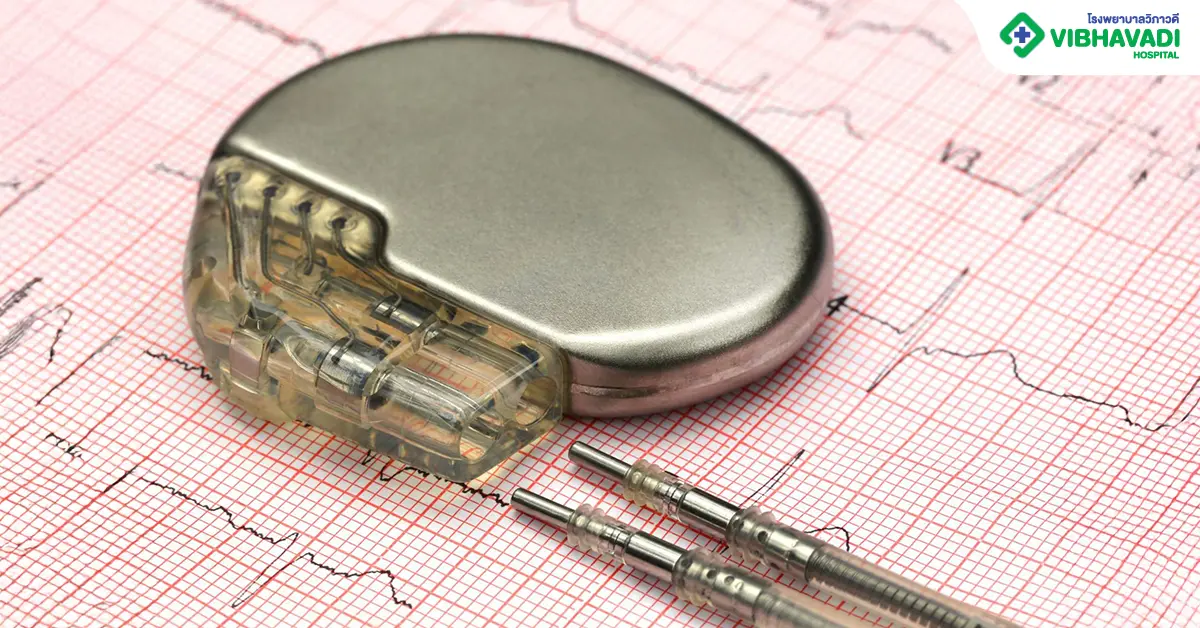
Pacemaker implantation surgery is a medical procedure to implant a tiny electronic device called a pacemaker beneath the skin below the collarbone. It functions to replace or supplement the operation of cells in the right atrium (Sinoatrial Node or SA Node), which is the natural pacemaker of the heart.
The cardiac pacemaker is a device consisting of a signal generator and pacing leads inserted into the heart chambers to send electrical currents that stimulate contraction according to a set rhythm.
How Does a Pacemaker Work?
The cardiac pacemaker functions by detecting the heart's natural rhythm in real-time. If the device detects that the heart beats slower than the preset rate, it sends mild electrical pulses directly through the leads into the heart chamber to force the heart muscle to contract at an appropriate rhythm. This process helps keep blood circulation and blood pressure at stable levels at all times, preventing the brain and peripheral organs from being at risk of ischemia.
What Are the Advantages of Pacemaker Implantation Surgery?
The results obtained from pacemaker implantation surgery help patients return to almost normal daily life. This is because the device helps control the heart rhythm to match various bodily activities, whether during rest or light exercise. It helps reduce the risk of sudden death due to cardiac arrest and relieves side effects such as dizziness or chronic fatigue, which are commonly found in people with heart disease. Furthermore, newer devices are compact in size and have a battery lifespan lasting several years.
How Many Methods of Pacemaker Implantation Are There?
Treatment with pacemaker implantation surgery depends on the patient's anatomy, vascular condition, and disease severity. A cardiologist will evaluate the appropriate technique, which can be categorized by device implantation method as follows:
Transvenous Approach
Also known as Endocardial Lead Placement, this is a standard and highly popular method in pacemaker implantation surgery. The doctor makes a small incision below the collarbone to locate a vein (Cephalic or Subclavian vein), then inserts electrical leads through the vein into the heart chambers using X-ray imaging for guidance.
Once the tip of the lead attaches to the heart wall at a position providing good electrical performance, the doctor connects the base of the lead to the pacemaker unit and implants the device in the subcutaneous layer above the chest muscle. This approach is also typically used for temporary pacemakers, where the device unit remains outside the body.
Epicardial Approach
This method is usually used when patients have limitations regarding venous access, such as vascular occlusion, or when performed alongside other cardiac surgeries. In this approach, the doctor attaches the electrodes directly onto the outer surface of the heart.
This method of pacemaker implantation surgery requires general anesthesia and access to the heart through a small thoracotomy or subxiphoid abdominal incision. It is a technique frequently used in pediatric patients whose blood vessel sizes are too small for standard lead placement.
Leadless Pacemaker Implantation
This represents an advancement in treating slow heart rates by inserting a tiny device without electrical leads. The unit resembles a small capsule containing both the battery and transmitter. The doctor introduces the device into the body through a femoral vein at the groin, using a catheter to guide it directly to the right ventricle, where it is anchored directly to the heart wall. This method reduces the long-term risks of lead fracture or displacement and leaves no surgical incision on the chest.
In addition to standard pacemakers, there is also a device known as an AICD (Automated Implantable Cardioverter Defibrillator). This functions as a cardiac device capable of both pacing slow rhythms and delivering electrical shocks to terminate life-threateningly fast and severe arrhythmias.
Preparation Before Pacemaker Implantation Surgery
Preparing the body before undergoing pacemaker implantation surgery involves the following instructions:
- Refrain from all food and drinks for at least 6–8 hours prior to the procedure.
- Provide details regarding drug allergies, underlying medical conditions, and a list of regularly taken medications.
- Undergo preparatory evaluations to assess cardiac structure.
- Clean and shave the skin around the chest area where the surgery will take place.
- Get adequate rest and maintain a calm mind before the appointment.
Steps in Pacemaker Implantation Surgery
The procedure is usually a minor surgery performed under local anesthesia, taking approximately 1–2 hours. The steps are as follows:
- The physician administers local anesthesia below the collarbone.
- A small incision of about 3–5 cm is made to create a pocket for the device beneath the skin.
- Electrical leads are inserted through a vein into the heart chambers, followed by electrical testing.
- The leads are connected to the generator, which is placed in the prepared pocket, and the incision is sutured closed.
Self-Care After Pacemaker Implantation Surgery
After surgery, care instructions for patients with a pacemaker include:
- Keep the incision dry and avoid contact with water during the first 7 days.
- Regularly monitor the wound for swelling, redness, or pus, and report these to a doctor immediately.
- Avoid lifting heavy objects or raising the arm above shoulder level during the first 4–6 weeks to prevent lead displacement before full attachment.
- Avoid areas with strong magnetic fields or high-energy radio frequency appliances.
- Carry a pacemaker identification card at all times to inform medical staff when receiving other medical treatments.
Pacemaker Implantation Surgery Helps Prevent Dangers from Arrhythmia
Deciding to undergo pacemaker implantation surgery is an essential step toward restoring a higher quality of life. Although an electronic device is added to the body, continuous advancements in pacemaker technology make adaptation easier. Regular follow-ups with your physician ensure accurate device performance and prolong equipment lifespan.
The Cardiovascular Center at Vibhavadi Hospital is fully prepared to offer comprehensive care through a skilled team experienced in cardiac surgery and various pacemaker implantation techniques. We utilize modern equipment under strict quality standards. For inquiries regarding treatment guidelines or information about pacemaker pricing, feel free to contact our staff for an initial consultation at any time.
- Facebook: Vibhavadi Hospital
- Line: @Vibhavadihospital
- Email: custserv@vibhavadi.com
- Tel: 02-058-1111 หรือ 02-561-1111
Frequently Asked Questions About Pacemaker Implantation Surgery
Are There Any Complications Associated with Pacemaker Implantation?
The surgery carries a low risk, though minor complications can occasionally occur. These include swelling or bruising, infection at the incision site, early lead displacement, or a pneumothorax (air leak in the chest cavity) caused by lead insertion. However, the medical team utilizes X-ray guidance and computerized systems during the procedure to minimize these risks as much as possible.
What Precautions Should Be Taken After Getting a Pacemaker?
A key precaution is avoiding proximity to devices with strong magnetic fields or high-energy radio waves, such as older-generation MRI scanners, arc welding equipment, or large speakers placed directly against the chest, as these can interfere with device signaling. Additionally, strict adherence to scheduled battery checks is essential to determine when the device generator will require replacement at the end of its battery lifespan.
Is Pacemaker Implantation Surgery Dangerous?
The procedure is performed under high safety standards and does not involve open-chest surgery. Most patients recover easily and resume daily activities within a few weeks. Commonly feared risks—such as sudden device failure or malfunction—are extremely rare with modern, standard-compliant pacemakers used today.
References
- Pacemaker Insertion. (n.d.). Johns Hopkins Medicine. https://www.hopkinsmedicine.org/health/treatment-tests-and-therapies/pacemaker-insertion
- Permanent Pacemaker. (2022, February 28). Cleveland Clinic. https://my.clevelandclinic.org/health/treatments/17360-permanent-pacemaker
- Overview Pacemaker implantation. (2022, July 26). NHS. https://www.nhs.uk/tests-and-treatments/pacemaker-implantation/
- Pacemaker. (2025, June 4). Mayo Clinic. https://www.mayoclinic.org/tests-procedures/pacemaker/about/pac-20384689
Testimonials
Proud to take care of you