Observe the early symptoms of RSV infection in children
Medical Care

Dr. Pranee Sitaposa
General Pediatrics
Package Recommends
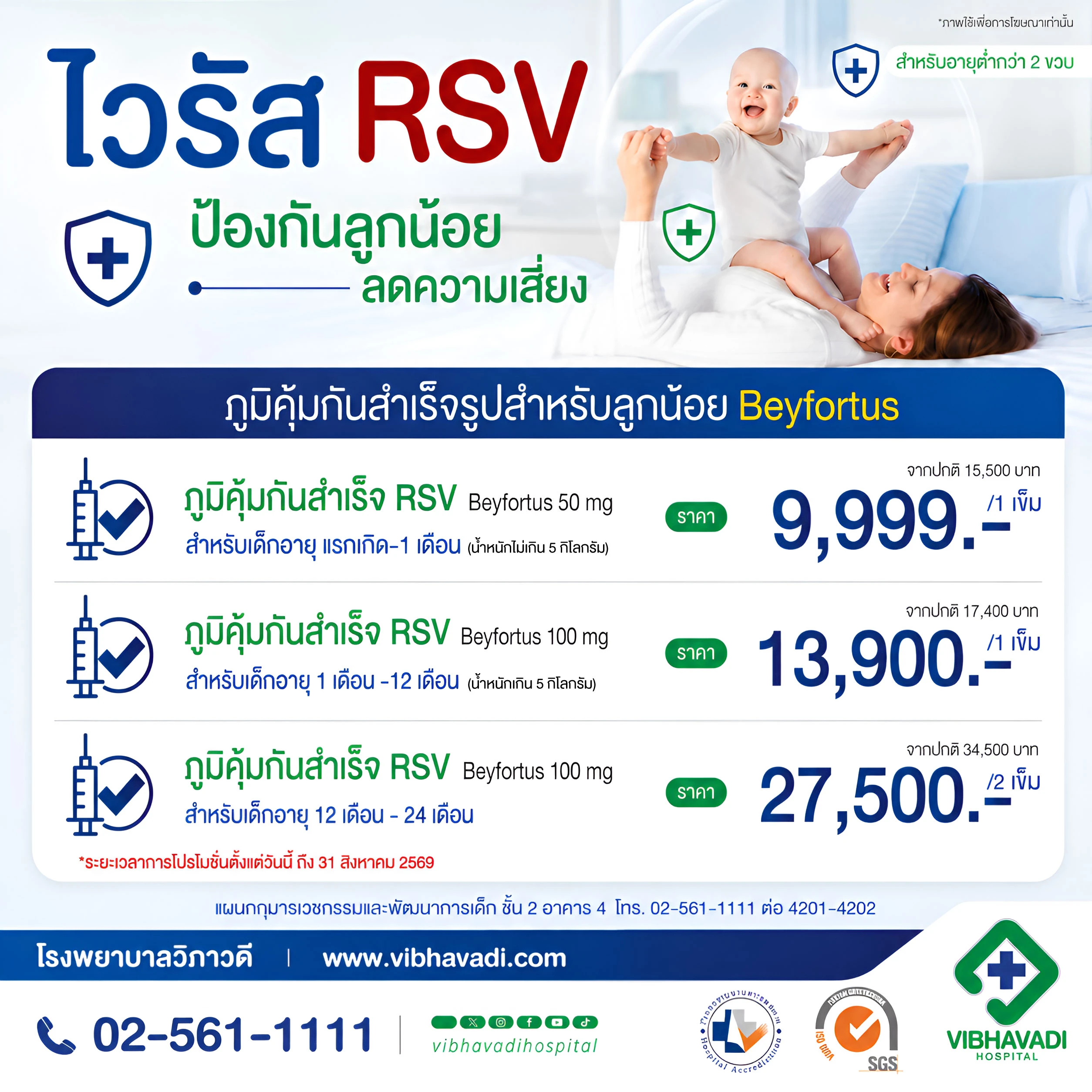
Passive immunization for RSV prevention in newborns to child
Related Articles
- RSV is a type of virus that causes upper and lower respiratory tract infections. It is found in both children and adults, especially in young children under 2 years old. RSV differs from the common cold in that it presents with a high, prolonged fever, frequent coughing, rapid breathing, shortness of breath with chest retraction, or wheezing.
- Symptoms of RSV can be observed and include thick nasal discharge, mild coughing, low-grade fever, lethargy, wheezing, chest retraction during breathing, wheezing during exhalation, cyanosis (bluish discoloration of the lips and nails), or abnormal paleness.
- RSV infection carries a risk of complications such as bronchiolitis, pneumonia, respiratory failure, apnea, secondary bacterial infections, dehydration, bronchial hypersensitivity, exacerbation of pre-existing conditions, and temporary growth delay.
Young children, especially those aged 0-2 years, often experience colds, runny noses, or coughs, which many parents may overlook as minor symptoms. However, these seemingly ordinary symptoms can be the early signs of RSV, a common virus in young children that can spread to the lungs if not treated promptly. Recognizing and observing the early signs of RSV in children aged 0-2 years can help parents seek medical attention promptly, reducing the risk of complications and promoting faster recovery.
This article will help you understand which symptoms to watch out for, which can be managed at home, and when to seek immediate medical attention, giving you greater confidence in caring for your child.
%20Re-op/Vibhavadi%20Hospital%20-%20Dec%202_Article.jpg)
What is RSV?
RSV (Respiratory Syncytial Virus) is a type of virus that causes upper and lower respiratory tract infections. It affects both children and adults, but symptoms are more severe in young children under 2 years old, especially if the infection spreads to the lower respiratory tract, potentially leading to pneumonia or bronchiolitis. In Thailand, the virus can be found year-round, but outbreaks are most severe during the late rainy season and early winter, or between July and November. Some individuals can be reinfected after a previous infection because there are many strains of RSV.
The disease is transmitted through direct contact with bodily fluids such as nasal mucus, sputum, or saliva, through the eyes, nose, and mouth, as well as inhaling airborne droplets from coughs or sneezes. Furthermore, RSV is an enveloped virus (RSV-A and RSV-B) that can contaminate various objects, allowing the virus to spread rapidly among children and those in close contact.
The Difference Between RSV and the Common Cold
RSV initially presents with symptoms similar to a common cold in children, such as fever, cough, and runny nose. However, RSV is often more severe. RSV symptoms typically include a high fever (39-40°C) that lasts longer than usual, and thick, sticky nasal discharge with copious amounts of phlegm, unlike the common cold which resolves on its own within 5-7 days.
Additionally, some cases of RSV may be absent due to a fever. However, a noticeable difference is the breathing pattern. Children infected with RSV may experience frequent coughing, rapid breathing, shortness of breath with chest retraction, or wheezing, along with lethargy and decreased appetite. If you observe any of these symptoms in your child (under 2-3 years old) – even without a high fever – you should seek medical attention immediately.
%20Re-op/Vibhavadi%20Hospital%20-%20Dec%202_Article2.jpg)
Who is at high risk for RSV infection?
- Infants and young children under 2 years old
- Children with underlying medical conditions
- Elderly (over 65 years old)
- Individuals with weakened immune systems
- Individuals with lung disease or chronic illnesses
- Individuals in high-risk environments
What are the causes and risk factors for RSV infection?
- Contact with droplets from an infected person's cough, sneeze, or speech
- Contact with contaminated surfaces or objects
- Young age, especially infants under 1 year old
- Premature birth or low birth weight
- Underlying heart, lung, or nervous system conditions
- Weakened immune system
- Crowded or enclosed environments
- Not being breastfed
- Exposure to cigarette smoke or air pollution
- RSV seasons
What are the initial symptoms of RSV in children?
- Clear to thick runny nose
- Slight cough
- Low-grade fever or no fever
- Lethargy, decreased feeding
- Wheezing or nasal congestion
%20Re-op/Vibhavadi%20Hospital%20-%20Dec%202_Article3.jpg)
RSV symptoms indicating a severe condition requiring immediate medical attention:
- Rapid breathing, shortness of breath, fatigue
- Sinking ribs or chest during breathing
- Wheezing during exhalation
- Bluish or pale lips, nails
- Very poor feeding or vomiting after each meal
- Very lethargic, difficult to wake, or weak crying
- Apnea, especially in young infants
Diagnosis of RSV:
- Medical history and symptom assessment
- Physical examination
- Nasal or throat swab examination
- Pulse oximetry (blood oxygen saturation)
- Chest X-ray (in severe cases or suspected complications)
- Blood test (in some cases)
RSV Treatment Guidelines
Currently, there is no antiviral medication that directly treats RSV. Treatment focuses on supportive care to promote recovery and close monitoring. The treatment guidelines are as follows:
Supportive Treatment
Supportive care focuses on managing symptoms to aid recovery, such as administering fever reducers, cough suppressants, and bronchodilators. In severe cases, oxygen may be necessary. For excessive phlegm, chest physiotherapy and suctioning may be performed to improve breathing. For shortness of breath and coughing, doctors may prescribe oral non-steroidal anti-inflammatory drugs (NSAIDs).
Close Monitoring and Surveillance
Close monitoring is crucial. Measure temperature every 4-6 hours. Observe symptoms including breathing, runny nose, and phlegm. If symptoms do not improve by day 4, seek immediate medical attention. The doctor will assess blood oxygen levels, respiratory rate, dehydration, listen to lung sounds for wheezing or shortness of breath, and look for other signs. A chest X-ray and sputum test may be performed to determine whether bronchodilators or oxygen are necessary to prevent complications such as pneumonia. Close monitoring is essential.
Treatment for Moderate to Severe Symptoms
For moderate to severe cases, hospitalization is necessary. Supplemental oxygen will be provided if blood oxygen levels fall below 92% to aid breathing and prevent respiratory failure. In children who are poor eaters or dehydrated, intravenous fluids may be administered, and mechanical ventilation and leukotrienes (anti-inflammatory drugs) may be used to reduce chronic shortness of breath and monitor for other complications.
%20Re-op/Vibhavadi%20Hospital%20-%20Dec%202_Article4.jpg)
Is RSV dangerous? What are the risks of complications?
Generally, RSV symptoms are similar to a common cold and resolve on their own in older children and healthy adults. However, in infants, children under 2 years old, the elderly, and those with underlying medical conditions, symptoms can be severe and complications can occur, requiring close monitoring.
- Bronchiolitis: Wheezing, shortness of breath, rapid breathing.
- Pneumonia: High fever, severe cough, difficulty breathing.
- Respiratory failure: Requires oxygen or mechanical ventilation.
- Apnea: Occurring in infants, especially premature babies.
- Secondary bacterial infections: Such as otitis media (middle ear infection) and recurrent pneumonia.
- Dehydration: Due to poor appetite, vomiting, and rapid breathing.
- Recurrent wheezing (Reactive airway disease): Recurring wheezing after recovery.
- Exacerbation of pre-existing conditions: Such as asthma, heart disease, and chronic lung disease.
- Temporary growth retardation: Due to poor appetite during illness.
Warning signs that warrant immediate medical attention include difficulty breathing, lethargy, refusal to eat or drink, bluish lips, intermittent apnea, or a persistent high fever.
Why is the RSV vaccine important?
RSV is a common respiratory virus in children under 2 years old. Once infected, it increases the risk of other, more severe respiratory infections. Vaccination in childhood helps boost immunity before illness strikes, reducing the severity of the illness to some extent. Young children are at high risk because their immune systems are not yet strong, making them more susceptible to infections and more severe illnesses than other age groups. Therefore, the RSV vaccine for newborns and children aged 0-2 years helps strengthen their immunity without waiting for the body to build immunity on its own. It reduces the risk of complications that can affect lung health in the long term, as RSV is not just a common cold for children; it can make life more difficult for them.
How to prevent RSV infection?
- Wash hands frequently with soap or alcohol-based hand sanitizer.
- Avoid taking children to crowded places during RSV season.
- Avoid close contact with people who have cold, cough, or sneeze symptoms.
- Separate sick children from healthy children, avoid close contact, and use separate personal items such as toys, cups, and towels to help reduce the spread of infection.
- Dress children in air-conditioned or cold environments in warm clothing to keep them adequately warm.
- Clean toys and frequently touched surfaces.
- Do not share personal items.
- Teach children to cover their mouths when coughing or sneezing.
- Breastfeed if possible to boost the child's immunity and reduce the risk of respiratory infections, as children receive antibodies from their mothers through breast milk, making them less susceptible to illness.
- Avoid cigarette smoke and indoor pollution.
- Maintain good health.
- Give preventative medication to high-risk children as directed by a doctor.
Can RSV resolve on its own?
In healthy children with mild symptoms, RSV usually resolves on its own within 7-10 days as the body's immune system eliminates the virus. Treatment is supportive, involving fever reducers, sponging, rest, plenty of fluids, and nasal suctioning. However, in young children under 6 months old, premature babies, or those with underlying conditions such as heart, lung, or weakened immune systems, symptoms can be severe, leading to pneumonia and respiratory failure, requiring hospitalization for oxygen and bronchodilators.
%20Re-op/Vibhavadi%20Hospital%20-%20Dec%202_Article4%20copy.jpg)
RSV Treatment at Vibhavadi Hospital
Vibhavadi Hospital, equipped with state-of-the-art equipment, provides timely and targeted treatment for RSV. Our expert pediatricians and children's disease specialists offer supportive care to alleviate symptoms. This includes symptomatic medication, chest physiotherapy to clear mucus and improve breathing, monitoring blood oxygen levels and respiratory rate, chest X-rays, sputum tests, and close monitoring to prevent potential complications.
Summary
RSV is a contagious respiratory illness transmitted through bodily fluids and airborne droplets from coughing and sneezing. It is most common between July and November, particularly in children under 2 years old. Initial symptoms often resemble a common cold but are more severe in young children. Currently, there is no direct cure; therefore, treatment focuses on supportive care and close monitoring to prevent complications. Prevention involves maintaining good hygiene, avoiding crowded places, and getting RSV vaccinations.
If parents notice any unusual symptoms or suspected RSV infection in their child, they can seek treatment at Vibhavadi Hospital, where we have advanced diagnostic equipment and comprehensive care. With expert physicians ready to closely monitor your condition, we aim to improve your respiratory health and make breathing easier.
FAQ