Stomach Cancer and Chronic Acid Reflux: How Much Does It Increase the Risk?
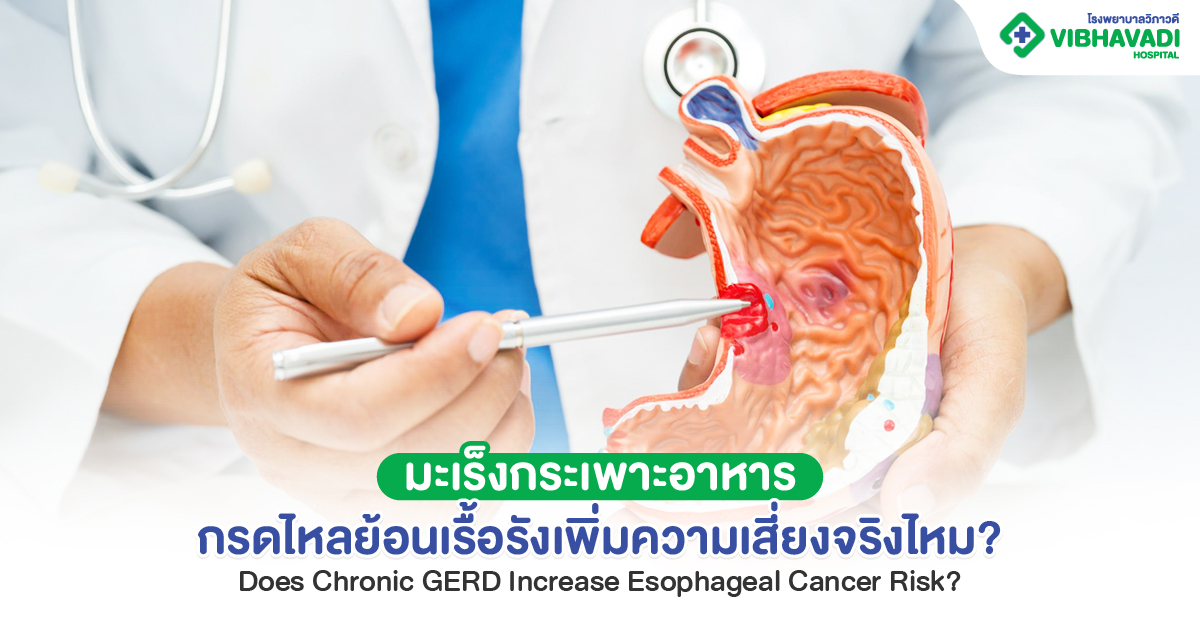
Stomach cancer and acid reflux may seem like two separate conditions, but they are more closely connected than many people realize. Chronic acid reflux not only causes ongoing discomfort in daily life, but it may also increase the risk of abnormal cellular changes in the lining of the esophagus. These changes can serve as a pathway to esophageal cancer or other conditions related to esophageal malignancies.
The symptoms your body presents can act as important warning signs, helping you seek medical evaluation and treatment at an early stage. In this article, Vibhavadi Hospital explains the relationship between stomach cancer and acid reflux, along with the risks and warning signs you should be aware of.
Key Takeaways
- Stomach cancer and acid reflux are associated conditions. Chronic acid reflux is a major risk factor that may lead to Barrett’s Esophagus and eventually progress to esophageal cancer or stomach cancer.
- Early-stage stomach cancer symptoms are often nonspecific and may resemble common digestive issues, such as bloating, feeling full quickly, or frequent burping. However, symptoms such as rapid weight loss, vomiting blood, or difficulty swallowing should prompt immediate medical attention.
- The standard approach for diagnosing stomach cancer is endoscopy with biopsy confirmation. CT scans may also be used to assess the extent of disease spread.
- Surgery remains the primary treatment option. Minimally invasive laparoscopic surgery may be combined with other treatments, such as chemotherapy, to improve treatment outcomes depending on the stage and severity of the disease.
Table of Contents
What Are the Symptoms of Stomach Cancer?
How Are Stomach Cancer and Acid Reflux Related?
What Are the Risk Factors for Stomach Cancer?
How Should Acid Reflux Be Treated to Help Prevent Stomach Cancer?
How Is Stomach Cancer Diagnosed?
How Is Stomach Cancer Treated?
Stomach Cancer and Acid Reflux: Don’t Ignore the Warning Signs
Frequently Asked Questions About Stomach Cancer and Acid Reflux
What Is Stomach Cancer?
Stomach cancer (Gastric Cancer, Stomach Cancer) is the abnormal growth of cancer cells that develop from the lining of the stomach. The majority of cases are classified as adenocarcinoma. This type of cancer can occur in any part of the stomach, but it is most commonly found in the lower portion of the stomach and at the junction between the stomach and the esophagus.
Stomach cancer is a serious disease that typically progresses slowly in its early stages. Symptoms are often nonspecific, causing many patients to seek medical attention only after the disease has advanced. This is why early risk assessment and screening are important for timely detection and treatment.
What Are the Symptoms of Stomach Cancer?
.jpeg)
In its early stages, stomach cancer symptoms can be similar to those of gastritis or common indigestion. However, if the following symptoms persist or worsen over time, medical evaluation should be sought promptly.
- Upper abdominal pain or discomfort: Patients may experience chronic pain, bloating, abdominal fullness, or a burning sensation in the upper abdomen that does not improve with standard antacid medications.
- Unexplained weight loss and fatigue: Individuals may feel unusually tired and experience significant weight loss without intentionally dieting or changing eating habits.
- Nausea and vomiting: Frequent episodes of nausea and vomiting, especially after meals, may occur. In some cases, vomiting blood can develop and may also be associated with early signs of esophageal cancer.
- Early satiety: Feeling full after eating only a small amount of food due to reduced stomach capacity caused by the tumor.
- Changes in bowel movements: Patients may pass black, tarry stools (melena), which can indicate chronic gastrointestinal bleeding and resulting anemia.
- Frequent belching: Early symptoms of stomach or esophageal cancer may include excessive belching. This symptom becomes more concerning when accompanied by other digestive abnormalities.
What Causes Stomach Cancer?
Stomach cancer develops as a result of genetic changes in the cells lining the stomach, causing them to grow and divide uncontrollably. Several factors are believed to contribute to the development of this disease, including:
- Helicobacter pylori (H. pylori) infection: This is one of the most significant risk factors. H. pylori infection causes chronic inflammation of the stomach lining, which can lead to cellular changes and eventually cancer development.
- Chronic inflammation of the stomach lining (Chronic Atrophic Gastritis): Conditions such as gastric mucosal atrophy and intestinal metaplasia, where stomach lining cells transform into intestine-like cells, are considered precancerous changes that may increase the risk of stomach cancer.
How Are Stomach Cancer and Acid Reflux Related?
The primary connection between stomach cancer and acid reflux lies at the gastroesophageal junction, the area where the stomach meets the esophagus. When acid reflux becomes chronic, acidic digestive fluids repeatedly flow back into the lower esophagus, continuously damaging the esophageal lining. This process can become the starting point for changes that may eventually lead to esophageal cancer.
Over time, this damage can cause the cells lining the esophagus to transform into a more acid-resistant type, a condition known as Barrett’s Esophagus. Barrett’s Esophagus is considered a precancerous condition and significantly increases the risk of developing esophageal adenocarcinoma, commonly referred to as esophageal cancer.
Therefore, stomach cancer, esophageal cancer, and acid reflux are closely related conditions. Although cancer in this region often originates in the esophagus, it develops near the upper part of the stomach and is frequently associated with long-standing acid reflux disease.
What Are the Risk Factors for Stomach Cancer?
.jpeg)
Acid reflux is not the only factor that increases the risk of stomach cancer. Several other factors may contribute to the development of both stomach cancer and esophageal cancer, including:
- Age and gender: Risk increases with age, particularly in individuals over 50 years old. These cancers are also more commonly diagnosed in men than in women.
- Dietary and lifestyle factors: Regular consumption of high-salt foods, smoked foods, pickled foods, and processed foods, along with low intake of fruits and vegetables, may increase the risk of stomach cancer. These habits can also worsen acid reflux, creating additional risk.
- Family history: Having a close relative with stomach cancer, esophageal cancer, or inherited genetic syndromes such as Lynch syndrome, Juvenile Polyposis Syndrome, or Hereditary Diffuse Gastric Cancer increases the likelihood of developing these diseases.
- Smoking and alcohol consumption: Both smoking and excessive alcohol intake are known risk factors for stomach and esophageal cancers and may contribute to more severe disease progression.
- Stomach polyps: Certain types of stomach polyps may increase the risk of developing stomach cancer.
How Should Acid Reflux Be Treated to Help Prevent Stomach Cancer?
Effectively managing acid reflux can help reduce the risk of esophageal cancer, stomach cancer, and other related complications. Recommended treatment approaches include:
- Acid-suppressing medications: Doctors may prescribe Proton Pump Inhibitors (PPIs) to reduce acid production in the stomach.
- Dietary modifications: Avoid high-fat foods, spicy foods, alcoholic beverages, and caffeine, particularly within three hours before bedtime.
- Weight management: Maintaining a healthy body weight can reduce abdominal pressure, which helps prevent acid reflux.
- Elevating the head of the bed: Raising the head of the bed by approximately 6–8 inches while sleeping can use gravity to help prevent stomach acid from flowing back into the esophagus.
How Is Stomach Cancer Diagnosed?
If a patient experiences early symptoms of esophageal cancer or signs that may indicate stomach cancer, diagnosis by a gastrointestinal surgeon or specialist typically focuses on laboratory testing and endoscopic evaluation.
- Esophagogastroduodenoscopy (EGD): This is the primary diagnostic procedure. A flexible endoscope is inserted through the mouth to examine the esophagus, stomach, and upper part of the small intestine for abnormalities.
- CT Scan or MRI: These imaging studies are used to evaluate whether stomach cancer has spread to nearby lymph nodes or other organs.
- PET Scan: This imaging technique helps identify cancer spread throughout the body and is useful for determining the stage of the disease.
- Biopsy: Performed during endoscopy, a tissue sample is collected from suspicious areas and examined under a microscope to confirm the presence of cancer cells.
- Endoscopic Ultrasound (EUS): This procedure combines endoscopy with ultrasound imaging to assess the depth of tumor invasion and the extent of cancer spread.
- Laparoscopy: A minimally invasive surgical procedure that allows direct visualization of internal organs when other imaging methods are insufficient for evaluating cancer spread.
How Is Stomach Cancer Treated?
.jpeg)
The treatment approach for stomach cancer depends on the stage of the disease, the location of the tumor, and the patient’s overall health. Patients should discuss treatment options with a surgeon or specialist to determine the most appropriate plan.
- Cancer surgery: Surgery is the primary treatment for early-stage through stage III stomach cancer. Depending on the extent of the disease, the surgeon may remove part of the stomach (partial gastrectomy) or the entire stomach (total gastrectomy).
- Chemotherapy: Chemotherapy uses anti-cancer drugs to destroy cancer cells. It may be administered before surgery to shrink the tumor or after surgery to reduce the risk of recurrence.
- Radiation therapy: Radiation may be combined with other treatments to target and destroy cancer cells in specific areas.
- Targeted therapy and immunotherapy: These treatments are often used for advanced stomach cancer or in patients whose tumors have specific genetic mutations that can be targeted with specialized medications.
Stomach Cancer and Acid Reflux: Don’t Ignore the Warning Signs
Stomach cancer and chronic acid reflux are conditions that should not be overlooked. Early symptoms of esophageal cancer are often subtle and may be mistaken for common digestive problems. If chronic acid reflux is left untreated, it can increase the risk of developing esophageal cancer over time. Accurate and timely diagnosis is therefore essential.
Vibhavadi Hospital’s Gastrointestinal Surgery Department provides specialized consultation and advanced endoscopic screening services for stomach-related conditions. Individuals seeking evaluation for persistent gastric symptoms can consult experienced specialists for stomach cancer screening, early diagnosis, and personalized treatment planning.
- Facebook: Vibhavadi Hospital
- Line: @Vibhavadihospital
- Email: custserv@vibhavadi.com
- Tel: 02-058-1111 หรือ 02-561-1111
Frequently Asked Questions About Stomach Cancer and Acid Reflux
What Type of Stomach Pain May Indicate Stomach Cancer?
Stomach pain that should not be ignored includes persistent discomfort or pressure in the upper abdomen, chronic bloating, indigestion, and symptoms that do not improve with standard antacid medications. If abdominal pain is accompanied by unexplained weight loss or vomiting blood, medical evaluation and appropriate cancer screening should be performed as soon as possible.
How Long Can Someone Live with Stomach Cancer?
Survival rates largely depend on the stage at which the cancer is diagnosed. When stomach cancer is detected at an early stage (Stage I), the likelihood of long-term survival is significantly higher. However, survival rates decrease substantially in advanced-stage disease (Stage IV). This is why early screening and timely diagnosis are extremely important.
How Can You Tell If You Have a Stomach Ulcer?
A stomach ulcer typically causes a burning or gnawing pain in the upper abdomen that is often related to meals. In contrast, stomach cancer symptoms are usually more persistent and may not respond well to medications. The most accurate way to distinguish between the two conditions is through endoscopy, which allows direct examination of the stomach lining and, if necessary, biopsy of suspicious tissue for further analysis.
References
- Stomach cancer. (2024, June 19). Mayo Clinic. https://www.mayoclinic.org/diseases-conditions/stomach-cancer/symptoms-causes/syc-20352438
- Stomach Cancer. (n.d.). National Cancer Institute. https://www.cancer.gov/types/stomach
- Stomach Cancer. (2022, May 17). Cleveland Clinic. https://my.clevelandclinic.org/health/diseases/15812-stomach-cancer
Testimonials
Proud to take care of you